
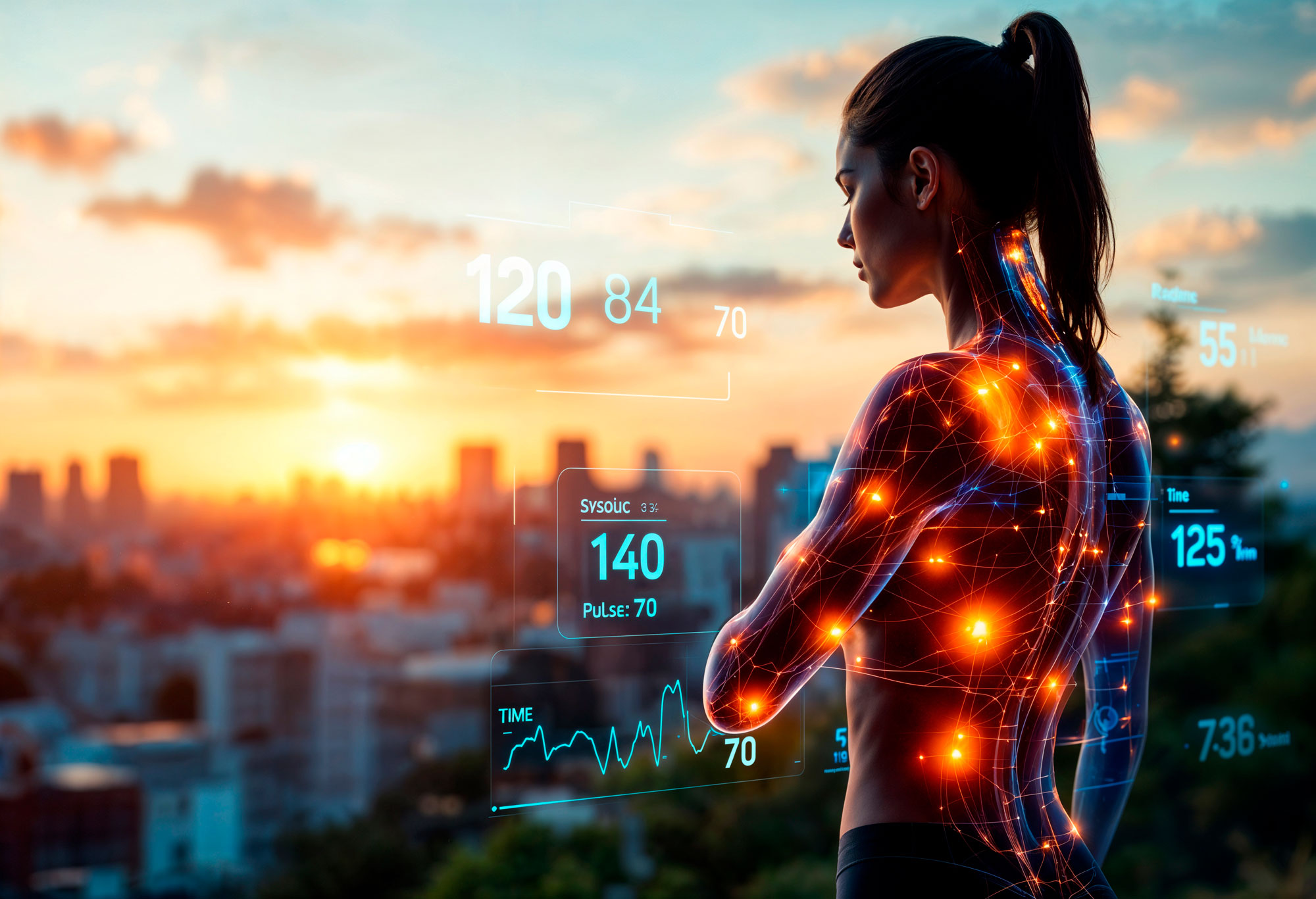
If personal accounting software can give people visibility into their financial life, what would happen if we extended that visibility to the rest of their life?
The future isn’t just people accounting. It’s human accounting.
We’re entering an era where AI could give individuals daily dashboards—not just for income and expenses—but for *wellbeing*. Your body, mind, and finances all integrated into a single, adaptive feedback system.
How is this for a cup to tea:
– You wake up and your phone (or implant, or scanner) gives you a full health check: heart rate, inflammation markers, recovery score.
– You also see your cash flow, outstanding invoices, subscriptions to cancel, and tax forecast.
– And finally, you get emotional trendlines from journal entries, voice tone, or biometric feedback—letting you know you’ve been stressed for days and need rest.
It sounds futuristic. But it’s not far off and that’s the sad part. Everything already exists here and now, but because we have the concept of ‘companies’ we can’t priorities human life before profit – that’s the wider truth that is about to change.
We already have pieces of this in:
– Smartwatches and wearables
– Blood glucose monitors and sleep trackers
– AI-powered financial apps
– Mood journaling tools
– Preventative health scans
What’s missing is *integration*. A single interface that sees us as whole people—not just consumers or patients or users or whatever it is that dehumanizes us.
This shift matters because health and money are deeply connected in our current system. Financial stress affects sleep, inflammation, decision-making. Poor health drives medical costs, absenteeism, and depression. We live in an environment that requires us to present different personalities for each situationship instead of being dealt with in our wholeness.
Human accounting is about closing the gap, using our wisdom to better our whole selves.
It’s about designing tools that reflect the truth: we are complex systems, not spreadsheets. We are not just working units—we are living beings with rhythms, pain, memory, and meaning.
AI has the potential to reflect this complexity. But only if we build it that way.
Not for data. Not for surveillance. But for clarity, care, and better decisions.
If every person could see where they *really* stand—financially, physically, emotionally—they could live more honestly. More sustainably. More in tune with what actually matters.
That’s not science fiction. That’s a better system.
And it starts with shifting our goals—from optimizing performance to supporting life. I hope we get here before I turn 50 because I want to live to 200 okay, and it’s not going to happen while I’m blind to how I am impacting my self and others. These are the things I think about at 2am in the morning.
Right, goodbye.